Monday, November 5, 2012

"Let Brotherly Love Continue"


Today, rather than writing as I normally do, I'd like to share my favorite biblical scripture and then expound upon it.  I may use additional scriptures from the Bible, Book of Mormon, Doctrine and Covenant or Pearl of Great Price.  I may expound upon some Mormonism teachings or I may simply share personal thoughts.

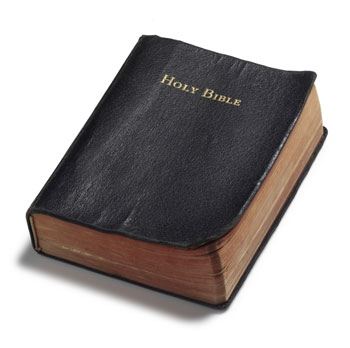
My favorite scripture in the Holy Bible is found in the book of Hebrews, chapter thirteen and verse one:
"Let brotherly love continue."

Whenever I hear or speak these words what comes to mind is the question a certain lawyer in the Meridian of Time asked Jesus Christ.  This experience can be found in the record of St. Matthew, chapter 22 verses 35-40:
"Then one of them, which was a lawyer, asked him a question, tempting him, and saying, Master, which is the great commandment in the law?  Jesus said unto him, Thou shalt love the Lord thy God with all thy heart, and with all thy soul, and with all thy mind.  This is the first and great commandment."

Why is the greatest commandment to love the Lord?  Why does this take precedence above all other commands?  I have spent much though on this and can give my best guess.  We are told to love the Lord with "all thy heart, and with all thy soul, and with all thy mind."  This is not saying, "Think of God every Sunday," or, "Pray to the Lord when you feel like it."  If a person loves God as that scripture says to, then that person would not want to do anything to disappoint God.  Loving someone with all our souls is a love that would do anything for them.  We would never intentionally hurt someone we love that much.

If we love the Lord our God with all our hearts and soul and mind, then we will, as just mentioned, we will do our best to not disappoint or hurt the Lord.  This may lead us to ask, "What would hurt the Lord?"  I think this is a simple question to answer.  When the children of Israel were led out of Egyptian bondage they were given commandments that he wanted them to follow.  I'd imagine when the Israelites followed these commandments the Lord was very pleased.  And when they did not follow these commandments I think the Lord was hurt by it.  What were these commandments?  Exodus chapter twenty reveals the answer:
1. Thou shalt have no other gods before me.
2. Thou shalt not make unto thee any graven image.
3. Thou shalt not take the name of the LORD thy God in vain.
4. Remember the sabbath day, to keep it holy.
5. Honour thy father and thy mother.
6. Thou shalt not kill.
7. Thou shalt not commit adultery.
8. Thou shalt not steal.
9. Thou shalt not bear false witness against thy neighbor.
10. Thou shalt not covet.

These ten things are what the Lord asked the children of Israel to follow, now referred to as the Ten Commandments.  Taken one at a time, or all together, these are all things that any person who loves the Lord with all their hearts, souls and mind would do without needing to be asked.

If we love the Lord completely and thoroughly will we need or even want to worship another god?  Especially a man-made one. If we do not want to worship another god would we bother making a graven image?  If we do not want another god then we do not want a graven image of one.  What comes next is vainly using the Lord's name.  If we love God with all our hearts would we not treat his name with reverence?  The Sabbath day, often called the Lord's day, is just that.  Following the previous three commandments and moved with love towards him, we would want to have a day set apart for worship, to stay away from the worldly things.

The remaining commandments do not seemingly have to do with God as the previous ones do, but when looked at closer we can see that they do as well.  Going back to the lawyer and Christ we read next in the record:
"And the second is like unto it, Thou shalt love thy neighbor as thyself.  On these two commandments hang all the law and the prophets."

What does this second commandment have to do with the first?  Why do all the law and the prophets hang upon it?  And what does it have to do with the remaining ten commandments?  Just as we would do our best to help out and refrain from hurting the Lord when we have a deep love for him, so we would treat our neighbors should we hold the same love for them.  This is doubly so when we know that all people are God's children and therefore we should respect them as we would respect Him.

And now we get to the remaining commandments, with that knowledge in mind.  Honor thy father and thy mother.  Parents should be given proper respect by their children.  With some unfortunate exceptions, parents have the wisdom that only comes with age and experience.  A mother or father that love the Lord will raise their children to do so.

Next comes the command to not kill.  I personally take this to mean someone should not kill anyone, including themselves   All people are the children of God, as mentioned before.  And all people have great potential.  No man or woman should have the right to take away the life from another man or woman.  "This life," as Alma teaches in the Book of Mormon, "is the time for men to prepare to meet God" (Alma 34:32).  When a person is taken early from this preparatory life they lose that time.

God commands next to keep from committing adultery.  In the Sermon on the Mount Christ expands on this by saying, "Ye have heard that it was said by them of old time, Thou shalt not commit adultery:  But I say unto you, That whosoever looketh on a woman to lust after her hath committed adultery with her already in his heart." (Matthew 5:28)  Thoughts lead to actions and so our thoughts must be pure as well as our actions.  But if we love God, and love his children, we would show proper respect towards them, and not do these things with them.

The next two are quite similar:  Theft and false witness.  Theft, robbery, cheating, lying, stealing, plundering and robbery, as well as many other things, can all fall under these two great commandments.  Just a couple days ago I came across the following quote by Ralph Waldo Emerson:
"Every man takes care that his neighbor shall not cheat him.  But a day comes he begins to care that he does not cheat his neighbor.  Then all goes well."
When we show this Christ-like love towards our neighbors we will then not want to rob or lie to them, and when they see that we do not want to do such things to them they will likely not want to do such things back to us.  "Then all goes well."

We come finally to the tenth commandment:  Thou shalt not covet.  Most people now days would use the word 'jealousy' to explain this commandment.  Refrain from jealousy.  Becoming jealous of another person's possessions leads to thoughts of wanting to obtain those possessions, which then leads to the previous commandments.

How did all of this start?  I go back to the very beginning of this page, to my favorite Bible scripture:  Let brotherly love continue.  Only four words.

Read also:
- Short Scriptures Have Great Power

If you'd like to know more about Mormonism, the Ten Commandments, the Holy Bible, or any other gospel topic, talk to a missionary about one:
Ask Someone Here

Friday, November 2, 2012

A Joyful Lesson From Alma Jr. - Mormonism Teaches Repentance


For the past little while I have shared some posts relating to Mormonism.  In brief, 'Mormonism' is a word some people use when talking about The Church of Jesus Christ of Latter-day Saints, or what the Church believes.  This particular post is on the topics of repentance and atonement.

"Repentance," as defined as LDS.org, "is one of the first principles of the gospel and is essential to our temporal and eternal happiness.  It is much more than just acknowledging wrongdoings.  It is a change of mind and heart that gives us a fresh view about God, about ourselves, and about the world."  Repentance, in short, is the process to change.  Big or small, whatever the sin, repentance is a gift to become a happier person.

The atonement is what makes this all possible.  Again using definitions from LDS.org, the atonement "to atone is to suffer the penalty for sins, thereby removing the effects of sin from the repentant sinner and allowing him or her to be reconciled to God.  Jesus Christ was the only one capable of carrying out the Atonement for all mankind.  Because of His Atonement, all people will be resurrected, and those who obey His gospel will receive the gift of eternal life."

Due to the effects of the Fall of Adam, all people would fall short of the Celestial Kingdom without some sort of atonement to redeem them from this fall.  That is what the atonement does.  Christ has paid the atonement for mankind to rise above this fall, on condition that they follow him.  If they do so they will return to the kingdom of God.  (This is talked about in more detail in my previous post, here.)  But everyone makes mistakes, and repentance is the process to get past these mistakes.

The scriptures contain countless examples of repentance.  In the Bible there can be seen the conversion of the great missionary Paul, before named Saul.  But the example I wish to use is from the Book of Mormon.  This is the story of Alma Jr.  Alma, much like Saul of Tarsus, went around persecuting those that believed in Christ.  This is his story, as he himself told it to his son Helaman, found in Alma chapter 36:
6.  For I went about with the sons of Mosiah, seeking to destroy the church of God; but behold, God sent his holy angel to stop us by the way.
7.  And behold, he spake unto us, as it were the voice of thunder, and the whole earth did tremble beneath our feet; and we all fell to the earth, for the fear of the Lord came upon us.
8.  But behold, the voice said unto me:  Arise.  And I arose and stood up, and beheld the angel.
9.  And he said unto me:  If thou wilt of thyself be destroyed, seek no more to destroy the church of God.
10.  And it came to pass that I fell to the earth; and it was for the space of three days and three nights that I could not open my mouth, neither had I the use of my limbs.
11.  And the angel spake more things unto me, which were heard by my brethren, but I did not hear them; for when I heard the words - If thou wilt be destroyed of thyself, seek no more to destroy the church of God - I was struck with such great fear and amazement lest perhaps I should be destroyed, that I fell to the earth and I did hear no more.
12.  But I was racked with eternal torment, for my soul was harrowed up to the greatest degree and racked with all my sins.
13.  Yea, I did remember all my sins and iniquities, for which I was tormented with the pains of hell; yea, I saw that I had rebelled against my God, and that I had not kept his holy commandments.
14.  Yea, and I had murdered many of his children, or rather led them away unto destruction; yea, and in fine so great had been my iniquities, that the very thought of coming into the presence of my God di rack my soul with inexpressible horror.
15.  Oh, thought I, that I could be banished and become extinct both soul and body, that I might not be brought to stand in the presence of my God, to be judged of my deeds.
16.  And now, for three days and for three nights was I racked, even with the pains of a damned soul.
17.  And it came to pass that as I was thus racked with torment, while I was harrowed up by the memory of my many sins, behold, I remembered also to have heard my father prophesy unto the people concerning the coming of one Jesus Christ, a Son of God, to atone for the sins of the world.
18.  Now, as my mind caught hold upon this thought, I cried within my heart:  O Jesus, thou Son of God, have mercy on me, who am in the gall of bitterness, and am encircled about by the everlasting chains of death.
19.  And now, behold, when I thought this, I could remember my pains no more; yea, I was harrowed up by the memory of my sins no more.
20.  And oh, what joy, and what marvelous light I did behold; yea, my soul was filled with joy as exceeding as was my pain!
21.  Yea, I say unto you, my son, that there could be nothing so exquisite and so bitter as were my pains.  Yea, and again I say unto you, my son, that on the other hand, there can be nothing so exquisite and sweet as was my joy.
- Alma 36:6-21 -

When people follow the steps of repentance it is rarely through such a dramatic way as it was for Alma.  But the end result can always be the same:  Our "souls [can be] filled with joy as exceeding as was [our] pain!"

If you have questions on repentance or the atonement, you can ask someone here and they will be happy to answer your questions.

Monday, October 29, 2012

What is Mormonism: Articles of Faith - Articles #2 / #3


This post is the next section of "What is Mormonism:  The Articles of Faith."  That first post briefly summarizes what the Articles of Faith are, and you can find it by clicking here (in case you have not read it).  Following that post I wrote a page explaining the first article, which is called, "Mormonism: The Articles of Faith - Article #1," and in case you missed it you can find it by clicking here.  This page is looking in detail at articles two and three, which are:


We believe that men will be punished for their own sins, and not for Adam's transgression.

We believe that through the Atonement of Christ, all mankind may be saved, by obedience to the laws and ordinances of the Gospel.


Both the second and the third articles of faith go together in explanation.  They are both related to the fall of Adam and Eve, and the atonement of Jesus Christ.  And so, to begin, I will explain the fall and the atonement.

In the beginning God created Adam and Eve in the garden called Eden.  When Eve, and later Adam, ate the fruit of the Tree of Knowledge of Good and Evil against the commands of God they were then sent out from the garden and the presence of God.  Their eating the forbidden fruit brought about mortality to the world.  Mankind was no longer fit to dwell in the kingdom of God, and should there not be some atonement for this fallen state of man, no one would again be able to return to Celestial Kingdom.

To help explain the implications of the fall, and the importance of an atonement, I'll quote the prophet Alma with my own commentary.

"And now, ye see by this that our first parents were cut off both temporally and spiritually from the presence of the Lord; and thus we see that they became subjects to follow after their own will.  Now behold, it was not expedient that man should be reclaimed from this temporal death, for that would destroy the great plan of happiness."
The fall of our first parents brought about two death:  temporal and spiritual.  The first is to physicall die, which became possible when the mortal body was obtained   The second is to be cast out of the presence of God, which happened when they were driven from the garden of Eden.

"And now remember, my son, if it were not for the plan of redemption, (laying it aside) as soon as they were dead their souls were miserable, being cut off from the presence of the Lord.  And now, there was no means to reclaim men from this fallen state, which man had brought upon himself because of his own disobedience."
Because mankind is no longer worthy to be in the presence of God, having sinned, if they were to die without a way for forgiveness, they'd spend eternity in the misery of knowing their sins.

"Therefore, according to justice, the plan of redemption could not be brought about, only on conditions of repentance of men in this probationary state, yea, this preparatory state; for except it were for these conditions, mercy could not take effect except it should destroy the work of justice.  Now the work of justice could not be destroyed; if so, God would cease to be God.  And thus we see that all mankind were fallen, and they were in the grasp of justice; the justice of God, which consigned them forever to be cut off from his presence."
What Alma is teaching here is that because man hadsinned, mankind would have to be punished for their sins or God, being just, would no longer be God.  But because God is merciful he provided the plan of redemption, a way to be forgiven.  The problem is that even with the plan of redemption someone has to pay for the sins committed, because justice cannot go unanswered.

"An now, the plan of mercy could not be brought about except an atonement should be made; therefore God himself atoneth for the sins of the world, to bring about the plan of mercy, to appease the demands of jstice, that God might be a perfect, just God, and a merciful God also."
To answer the requirements of justice, God being just, a Savior was chosen to pay the price for sin.  This is Jesus Christ, God's son.  But the question could be asked, "Why did God's son need to be sent to atone for man's sins?  Could not a man atone for his sins?"  Alma continues,

"Now, repentance could not come unto men except there were a punishment, which also was eternal as the life of the soul should be, affixed opposite to the plan of happiness, which was as eternal also as the life of the soul." (Alma 42:10-16.)
The son of God needed to atone for sins because the atonement had to be as eternal as the fall.  The fall, if no atonement, would be eternal.  Mankind would be in a fallen state forever.  Therefore the atonement had to be eternal.  The atonement had to cover all the sins of all mankind.  To further explain why Christ needed to atone for mankind Alma teaches, on another occasion:
"It must be an infinite and eternal sacrifice.  Now there is not any man that can sacrifice his own blood which will atone for the sins of another.  Now, if a man murdereth, behold will our law, which is just, take the life of his brother?  I say unto you, Nay.  But the law requireth the life of him who hath murdered; therefore there can be nothing which is short of an infinite atonemetn which will suffice for the sins of the world." (Alma 34: 10-12.)

The third article of faith says that mankind may be saved through the atonement, explained above, by obedience to the laws and ordinances of the gospel.  Alma now explains the importance of having laws, and how following them brings our salvation.

"Now, how could a man repent except he should sin?  How could he sin if there was no law?  How could there be a law save there was a punishment?"
This is straightforward:  A law has two parts - if you obey the law you are rewarded, and if you break the law you are punished.  But you cannot be punished for breaking a law if there is no law, and you cannot be rewarded for following a law if there is no law.

"Now, there was a punishment affixed, and a just law given, which brought remorse of conscience unto man.  Now, if there was no law given - if a man murdered he should die - would he be afraid he would die if he should murder?  And also, if there was no law given against sin men would not be afraid to sin.  And if there was no law given, if men sinned what could justice do, or mercy either, for they would have no claim upon the creature?"
As explained before, if there was no law then man cannot be punished, nor rewarded.  Also, however, if there was no law then man would not be afraid to sin.

"But there is a law given, and a punishment affixed, and a repentance granted; which repentance, mercy claimeth; otherwise, justice claimeth the creature and executeth the law, and the law inflicteth the punishment; if not so, the works of justice would be destroyed, and God would cease to be God." (Alma 42:17-22.)

The law was set in the garden of Eden, which Adam and Eve broke, bringing about the punishment of forever being in an eternal state.  But because God is merciful he allowed a way for repentance by giving his Son to atone for the sins of the world, if they would obey his commandments.  So if people obey the commandments of God they can be forgiven of their sins through the atonement that Christ paid.  This repentance allows us to return to the presence of God with a clear conscience.  However, because God is just as well as merciful, if a person does not follow God's commandments then it is as if an atonement for their sins was not made for them and they have to pay the price of justice.

And now, having that lengthy explanation given, we can go back to the two articles of faith and explain them one at a time.

The second article of faith says, "We believe that men will be punished for their own sins, and not for Adam's transgression."  As shown previously Adam's transgression (the fall) has been taken care of by way of the atonement.  The fall brought spiritual death to all people, but the atonement repairs the bridge back across that spiritual death.  It is only the sins that a person commits himself that he is judged for.

The third, continuing on from where the second leaves off, is that not only will men be judged only for their own sins, but man can even be saved from these sins if they are obedient to God's will.  The demands by justice for our sins have been paid for through the atonement if we repent of them.  This is the blessing of mercy and justice working together.


Want to know more?

Chat with the missionaries and they'd love to help answer your questions.

Mormonism: The First Presidency


The First Presidency is the name given to the highest governing body of the Church of Jesus Christ of Latter-day Saints.  This governing body is made up of three apostles.  And so one must ask what an apostle is.  The dictionary's definition of 'apostle' is "any of the early followers of Jesus who carried the Christian message into the world."  But how does Mormonism define an apostle?  LDS.org defines it as follows:
"An 'apostle' is an ordained leader in the Melchizedek Priesthood in The Church of Jesus Christ of Latter-day Saints.  Apostles are chosen through inspiration by the President of the Church, sustained by the general membership of the Church, and ordained by the First Presidency and Quorum of the Twelve Apostles by the laying on of hands.  In addition to serving as witnesses of Jesus Christ to all the world, as Jesus' apostles did, members of the current Quorum of the Twelve Apostles hold the keys of the priesthood - that is, the rights of presidency."
When Christ lived on earth he chose twelve of his followers to be apostles.  These twelve helped watch over the disciples and teach them the gospel.  When the Lord visited those in the Western Hemisphere after his resurrection he did the same thing, choosing twelve to be apostles to watch over the church with the prophet.  And again, in the 19th century, when Christ was restoring his church on the earth he chose those to lead it.

In this dispensation fifteen apostles are chosen to watch over the church.  The senior apostle, the one who has served the longest in the calling of apostle, is also prophet of the church.  Of the remaining apostles that prophet chooses two counselors.  These three make the First Presidency.  The twelve remaining apostles make up what is called the Quorum of the Twelve Apostles.

During the year 2008 the previous prophet, Gordon B. Hinckley, passed away and the next senior apostle took his place as prophet.  That apostle was Thomas S. Monson, having served as apostle since 1963.  His counselors are Henry B. Eyring and Dieter F. Uchtdorf.

Here is a video with pictures of the First Presidencies, past and present, from Joseph Smith through Thomas S. Monson.  The video, titled "Mormonism:  The First Presidency," plays the song "We Thank Thee, O God, For A Prophet," as played by Spencer Mangum.  Music is used with permission.


For a little additional fun, I have created a couple quizzes on these first presidencies.  When you have watched the video enough and think you know who all the prophets are, follow the link below and take the prophet quizzes.

Name That Prophet!

The second Mormonism quiz on the presidency I created is much tougher.  This set of quizzes asks about the counselors to the prophets.  If you think you know the counselors over the years then follow the link below and see how much you know.

Mormonism Pop Quiz - The First Presidency


Friday, October 26, 2012

Jesus the Christ - Mormonism Video


Photos are used with permission of Del Parson | Music used with permission of Spencer Magnum

| Del Parson http://www.delparson.com/ | 

What is Mormonism: Articles of Faith - Article #1


This post is about the first Article of Faith, mentioned in the previous post about Mormonism.  The first article, as written in the Wentworth Letter by Joseph Smith, is as follows:

We believe in God, the Eternal Father, and in His Son, Jesus Christ, and in the Holy Ghost.

The significant belief in this is that these three members of the Godhead are three separate beings.  In the Holy Bible we can find examples of this.  One such example is at the baptism of Jesus Christ.  Matthew's record states that Christ was baptized in the river, and then God spoke from the heavens while the Holy Ghost descended.  (Matthew 13:13-17)

However, the knowledge of three separate beings is best seen in Joseph Smith's 'First Vision.'  This vision of his took place when he was a young teenager.  Following the directions of James of the Bible, as found in chapter 1 and verse 5 of his account, Joseph found a private place to pray to ask which religion he should join.  At this time God, the Father, and Jesus Christ presented themselves to Joseph Smith by the power of the Holy Ghost.

L. Tom Perry, of the Quorum of the Twelve Apostles, has said, "Our belief does not come from the speculations of men about the existence and nature of God, but from firsthand experience clarified for mankind and the existence of God the Father, God the Son, and God the Holy Ghost.  Thus to the world came the vision that three personages comprise this great presiding council of the universe and have revealed themselves to mankind as three separate beings, physically distinct from each other as demonstrated by the accepted records of their divine dealings with mankind." (The Articles of Faith, Ensign, April 1998.)

*If you have more questions about Mormonism, the first Article of Faith, Joseph Smith, the Godhead, or something else concerning the Church of Jesus Christ of Latter-day Saints, ask the missionaries:
Chat with a Missionary!

What Is Mormonism: Articles of Faith


Many people ask "What is Mormonism?" or "What do Mormons believe?"  These questions have been around since the time of Joseph Smith.  A man named John Wentworth, an editor and proprietor of the Chicago Democrat, asked this very thing to Joseph Smith.  His reply is what is now referred to as the Wentworth Letter.  In this letter Joseph gave a brief history of his own life, and the history of the Church up until 1842 (twelve years after the Church was formed).  Also in this letter are found the Standard of Truth and the Articles of Faith.  It is that last part that I will continue to talk about now.
*If you'd like to read the rest of the Wentworth Letter, click here.

The final portion of the Wentworth Letter is what is now called the Articles of Faith.  These are three key points that help outline Mormonism, just what it is that the Church of Jesus Christ of Latter-day Saints believes.  For those do not know these thirteen articles of faith, I will now list them.

  1. We believe in God, the Eternal Father, and in His Son, Jesus Christ, and in the Holy Ghost.
  2. We believe that men will be punished for their own sins, and not for Adam's transgression.
  3. We believe that through the Atonement of Christ, all mankind may be saved, by obedience to the laws and ordinances of the Gospel.
  4. We believe that the first principles and ordinances of the Gospel are:  first, Faith in the Lord Jesus Christ; second, Repentance; third, Baptism by immersion for the remission of sins; fourth, Laying on [of] hands for the gift of the Holy Ghost.
  5. We believe that a man must be called of God, by prophecy, and by the laying on hands by those who are in authority, to preach the Gospel and administer in the ordinances thereof.
  6. We believe in the same organization that existed in the Primitive Church, namely, apostles, prophets, pastors, teachers, evangelists, and so forth.
  7. We believe in the gift of tongues, prophecy, revelation, visions, healing, interpretation of tongues, and so forth.
  8. We believe the Bible to be the word of God as far as it is translated correctly; we also believe the Book of Mormon to be the word of God.
  9. We believe all that God has revealed, all that He does now reveal, and we believe that He will yet reveal many great and important things pertaining to the Kingdom of God.
  10. We believe in the literal gathering of Israel and in the restoration of the Ten Tribes; that Zion (the New Jerusalem) will be built upon the American continent; that Christ will reign personally upon the earth; and, that the earth will be renewed and receive its paradisaical glory.
  11. We claim the privilege of worshiping Almighty God according to the dictates of our own conscience, and allow all men the same privilege, let them worship how, where, or what they may.
  12. We believe in being subject to kings, presidents, rulers, and magistrates, in obeying, honoring, and sustaining the law.
  13. We believe in being honest, true, chaste, benevolent, virtuous, and in doing good to all men; indeed, we may say that we follow the admonition of Paul - We believe all things, we hope all things, we have endured many things, and hope to be able to endure all things.  If there is anything virtuous, lovely, or of good report or praiseworthy, we seek after these things.

These thirteen points do not contain everything in Mormonism, but the key points are here.  For those wanting further explanation, you can follow the links below (other posts about the Articles of Faith) or you can ask a missionary!